www.thinfilmdesigns.com
Blog_03 — Printed Electronics
Printed Silver or Etched Copper? Additive vs. Subtractive Technology
January 27, 2023 — 8 min read
The first question on every flexible-circuit program is rarely about conductivity. It is about resistance budget, volume, flex radius and cost pressure — and those four usually decide between additive printed silver and subtractive etched copper long before anyone argues about the chemistry.
Additive printing deposits only the conductor the circuit needs. Subtractive etching plates a full copper film and dissolves away everything that is not a trace. Both reach the same schematic; they reach it with very different economics, environmental loads and tolerance envelopes.
Clear PET: A New Canvas for Additive Electronics
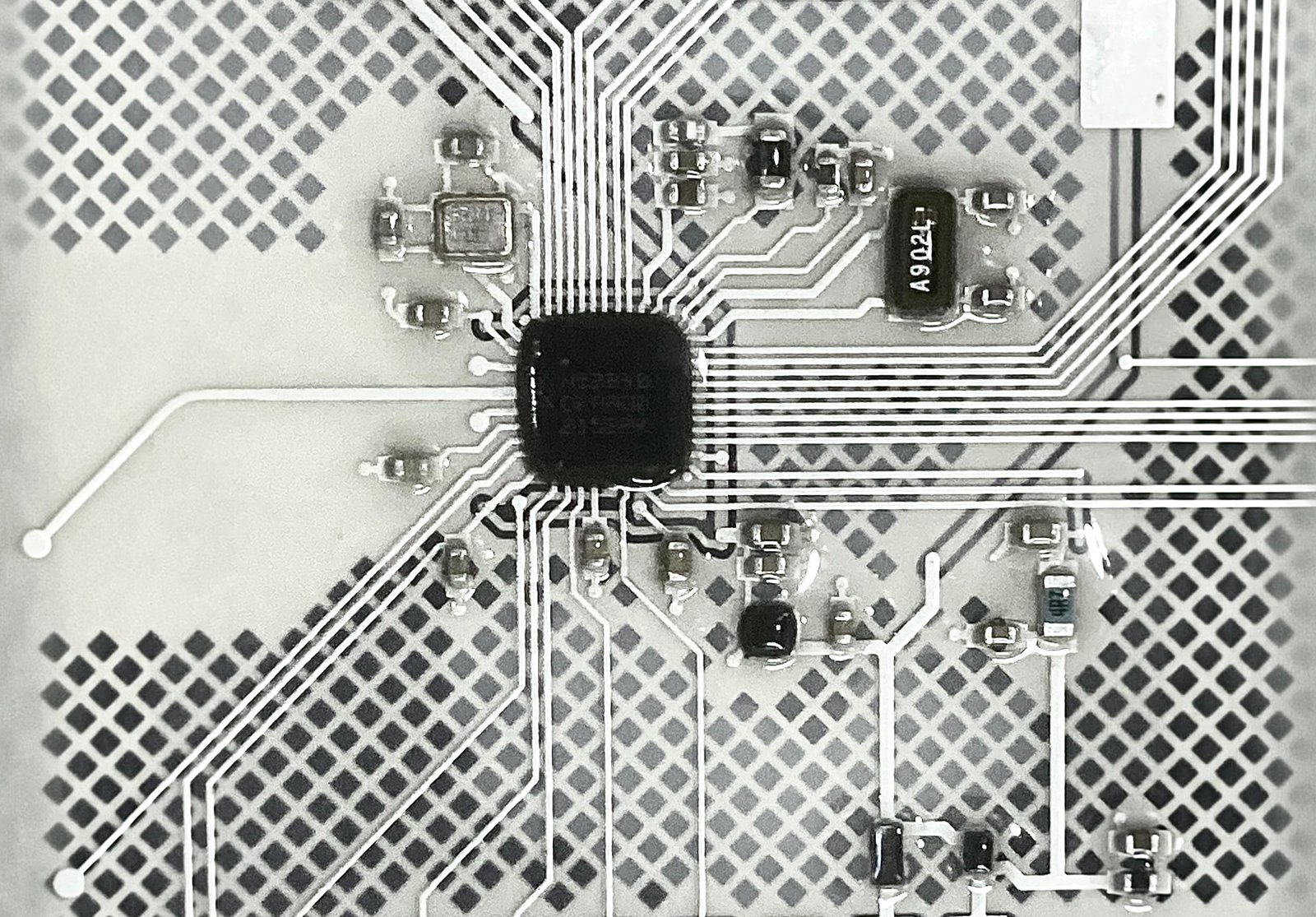
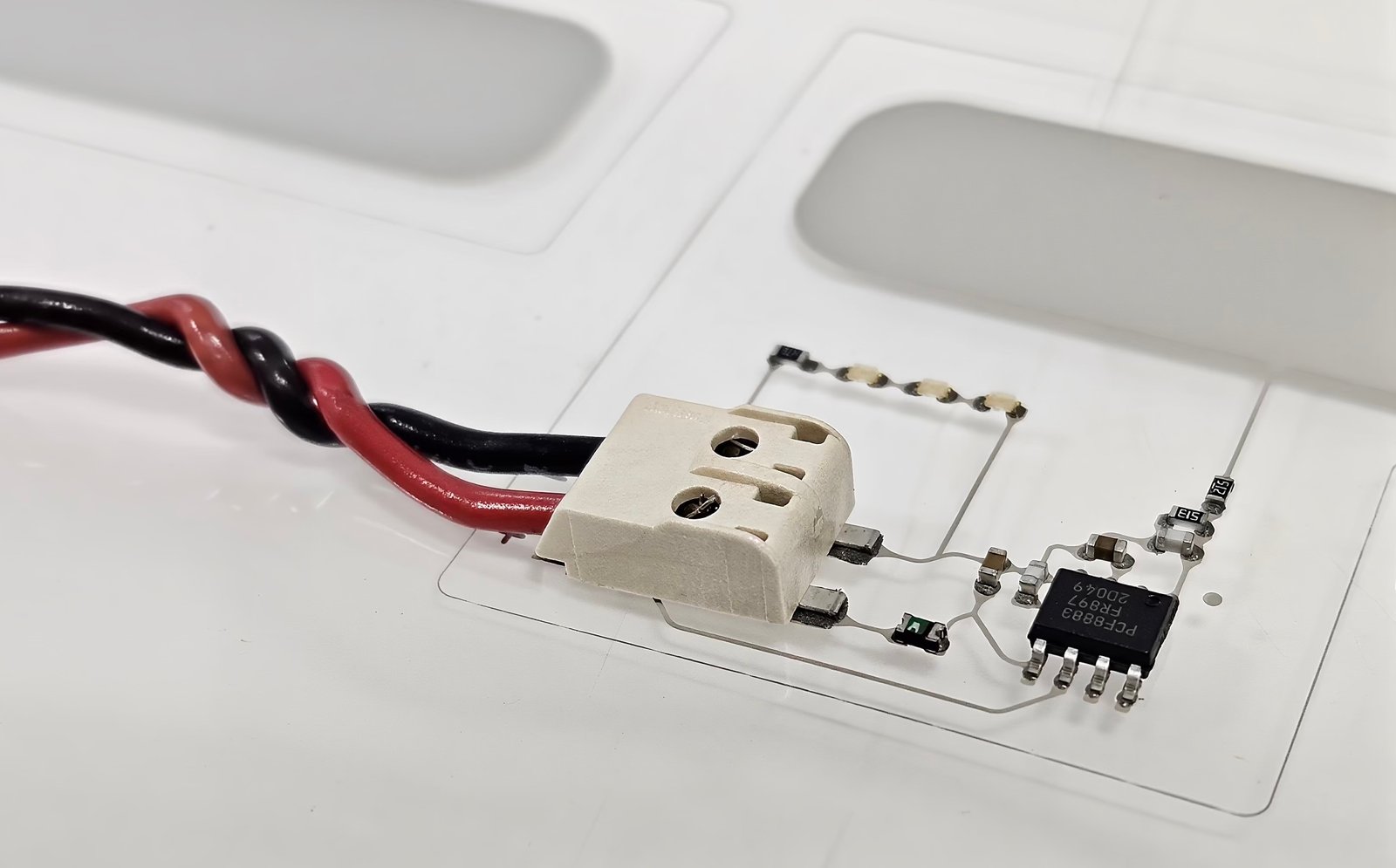
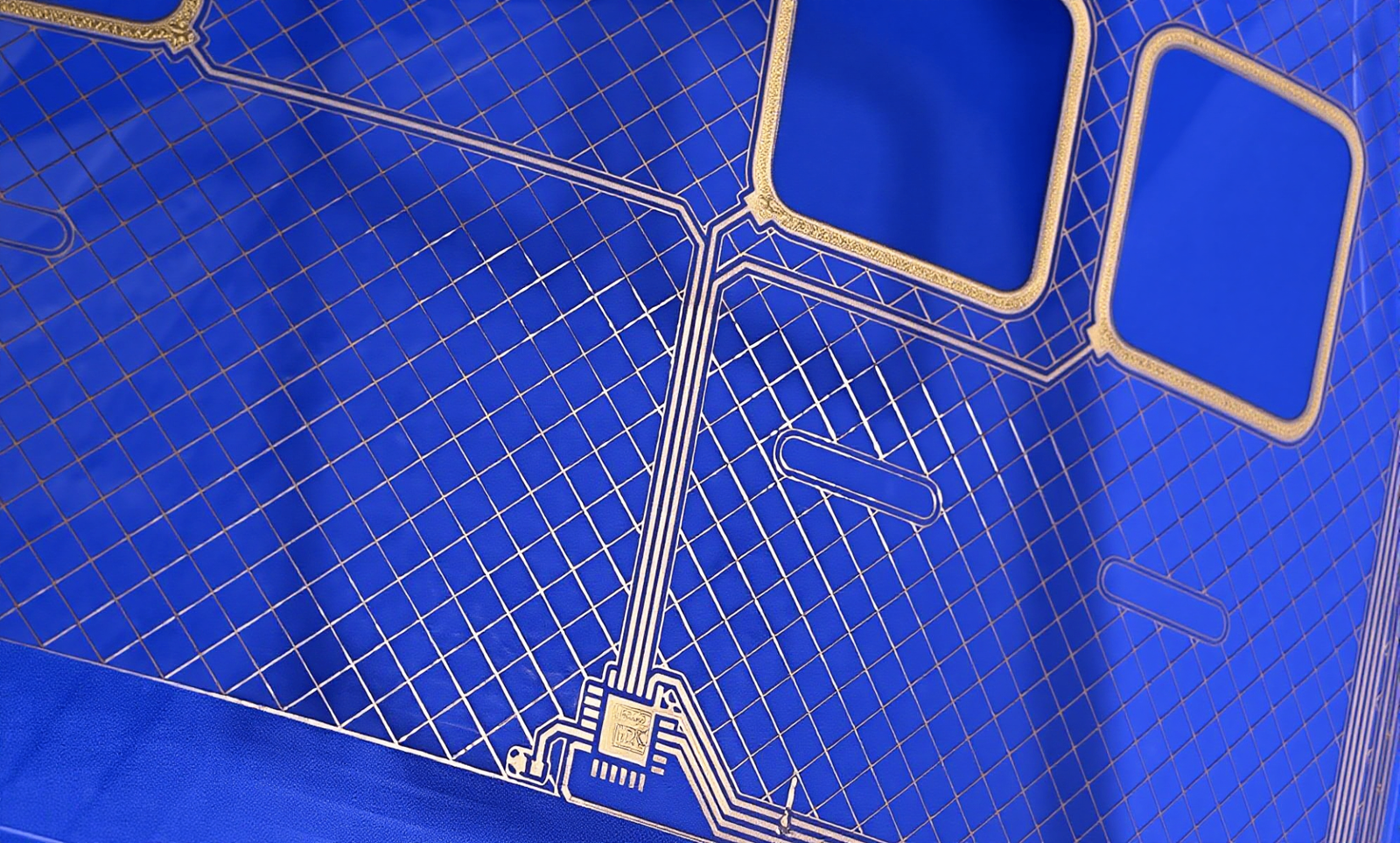
Integration is the real promise of printed electronics: a single transparent PET film can become both the circuit carrier and the product interface. Printed silver or copper patterns can provide interconnections, heating elements, antennas and capacitive touch sensing, while surface-mounted LEDs provide backlighting — reducing the need for separate boards, wiring and switch assemblies. Transparency is preserved by keeping opaque conductors outside viewing areas or using fine-mesh patterns.
A small full-color display optically bonded to the opposite face would complete the proposed interface. Thermoformable conductors could then enable a contoured product rather than a flat panel — but the display, solder joints and rigid components need protected, low-strain regions and a validated assembly sequence. The opportunity is compelling: fewer separate parts and greater design freedom, provided the complete material stack survives both assembly and forming.